
Get In Touch
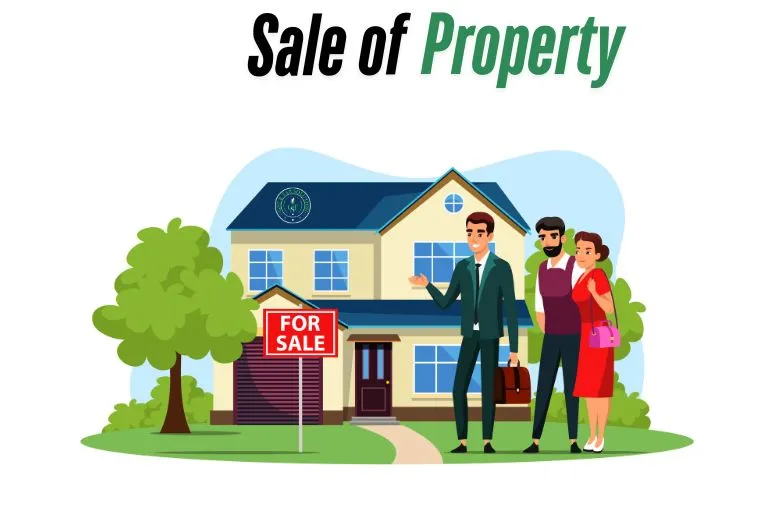
Sale Of Property
Classification of Property: Property held for more than 24 months is considered a long-term capital asset, while property held for 24 months or less is treated as a short-term capital asset.
Capital Gains Tax: Short-term capital gains (STCG) are taxed as per the income tax slab, while long-term capital gains (LTCG) are taxed at a flat rate of 20% with indexation.
Tax Deducted at Source (TDS): If the sale consideration exceeds ₹50 lakh, the buyer must deduct 1% TDS under Section 194IA and deposit it with the government.
Computation of Capital Gains: The capital gain is calculated as the difference between the sale price and the indexed cost of acquisition/improvement (for LTCG) or purchase price (for STCG).
Exemptions on Capital Gains: Exemptions are available under Sections 54 (residential property purchase), 54EC (investment in bonds), and 54F (reinvestment in another house property).
Short-Term Capital Gains (STCG): If a property is sold within 24 months of purchase, STCG is added to the seller’s total income and taxed as per the applicable slab rate.
Long-Term Capital Gains (LTCG): If a property is held for more than 24 months, LTCG is taxed at 20% with indexation benefits.
Deductions and Exemptions: Taxpayers can claim deductions under Sections 54, 54EC, and 54F to reduce their tax liability on capital gains.
Reporting and Compliance: The seller must report the capital gains while filing their Income Tax Return (ITR) under Schedule CG.
Advance Tax Payment: If capital gains tax liability exceeds ₹10,000, advance tax must be paid in four installments during the financial year.
Definition: Indexation adjusts the purchase price of an asset to account for inflation, reducing taxable capital gains.
Cost Inflation Index (CII): The government publishes CII every year, which helps in computing the indexed cost of acquisition and improvement.
Benefits: Reduces taxable LTCG and lowers tax liability significantly.
Applicability: Indexation applies only to LTCG on property sales, not STCG.
Short-Term Capital Gains: Taxed as per the individual’s income tax slab (5%, 10%, 15%, 20%, or 30%).
Long-Term Capital Gains Without Indexation: As per the latest Budget 2025 rules, LTCG tax may be levied at 12.5% if indexation benefits are not used.
Impact on Taxpayers: Opting out of indexation may lead to higher tax liability if inflation has significantly increased the property value.
Deductions Still Available: Taxpayers can still claim exemptions under Sections 54, 54EC, and 54F, even if indexation is not applied.
Comparison With Indexation: Tax with indexation is often lower than without indexation, as it accounts for inflation.
Important Aspects of Property Sale in Taxation:-
Gifted or Inherited Property: Inheritance is not taxable, but capital gains tax applies when the recipient sells the property.
Tax on NRI Property Sale: NRIs are subject to a 20% LTCG tax with indexation and higher TDS (usually 20%-30%).
Stamp Duty Consideration: If a property is sold below stamp duty value, the difference is taxable under Section 50C as “deemed income.”
Joint Ownership Taxation: Capital gains are divided based on ownership percentage, and each co-owner pays tax accordingly.
Exemptions via Reinvestment: Investing in another house or eligible bonds can help avoid capital gains tax under Sections 54 and 54EC.
For assistance with GST filing, tax notices, ITR filing, company formation, and tax planning, feel free to contact Kumar & Associates, your trusted tax consultancy partner !
📞 Contact Us Today for a Consultation!