
Get In Touch
Goods and Services Tax (GST) Registration
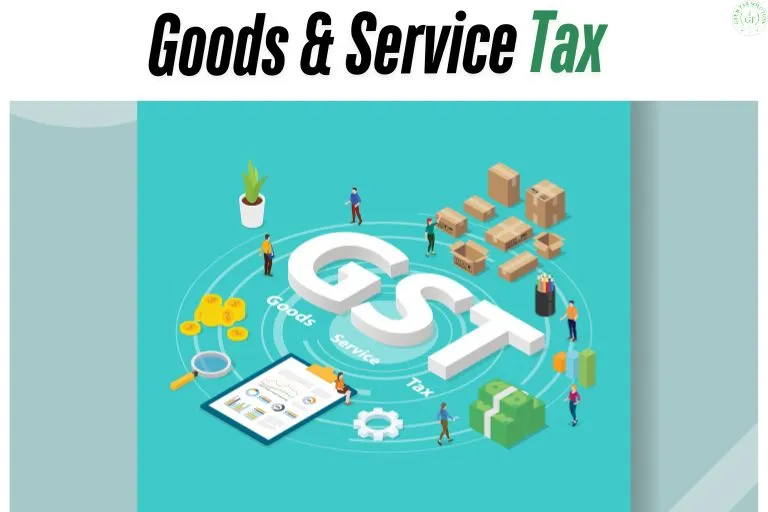
GST registration is a crucial compliance requirement for businesses in India. It ensures that companies can legally collect and remit GST to the government. This article explains GST registration, its benefits, types, limits, registration clauses, filing types, and the registration process.
GST registration is the process by which businesses register under the Goods and Services Tax (GST) system in India. It is a unique identification number assigned by the tax authorities to track tax payments and compliance. Any business exceeding the prescribed turnover limit or engaged in inter-state supply must register for GST.
GST is a comprehensive, multi-stage, destination-based tax levied on the supply of goods and services. It has replaced multiple indirect taxes such as VAT, service tax, and excise duty, creating a unified tax system. The registration process is entirely online through the GST portal, where businesses submit documents like PAN, Aadhaar, business proof, and bank details.
Failure to register for GST when required can result in penalties. Businesses that voluntarily register for GST, even if their turnover is below the threshold, can benefit from input tax credit (ITC) and improved business credibility. GST registration enhances transparency and simplifies tax collection, making it an essential requirement for businesses operating in India.
GST registration provides several advantages to businesses, improving tax compliance and operational efficiency. One of the main benefits is the input tax credit (ITC), which allows businesses to claim credit for taxes paid on purchases, reducing the overall tax burden. This avoids tax cascading, where tax is applied multiple times on the same product or service.
A registered business also gains legal recognition and credibility. Many companies and government tenders require suppliers to have a valid GST number. Being GST-registered improves market opportunities and enables businesses to trade seamlessly across states without additional taxes like CST.
Another key benefit is simplified tax compliance. GST replaces multiple indirect taxes, reducing the complexity of tax calculations and filings. The GST portal provides an online system for registration, return filing, and tax payment, making compliance more accessible for businesses.
Additionally, small businesses can opt for the Composition Scheme, which offers lower tax rates and reduced compliance requirements. GST also facilitates the seamless movement of goods across states with e-way bills, reducing logistical delays.
Overall, GST registration enhances business credibility, lowers tax burdens, simplifies compliance, and expands market access, making it a vital step for businesses in India.
The GST system in India is structured into four types to ensure a smooth tax collection process:
Central GST (CGST) – Levied by the central government on intra-state transactions, CGST replaces central indirect taxes like excise duty and service tax.
State GST (SGST) – Collected by state governments on intra-state transactions, SGST replaces VAT and state-level taxes.
Integrated GST (IGST) – Imposed on inter-state supplies, IGST is collected by the central government and later distributed to the destination state.
Union Territory GST (UTGST) – Applied in union territories such as Delhi, Chandigarh, and Lakshadweep, UTGST functions similarly to SGST.
These four types ensure a uniform tax structure and prevent double taxation, making GST a streamlined tax system for businesses across India.
The GST registration threshold varies based on turnover and business type. As per the latest regulations:
Businesses engaged in the supply of goods must register if their annual turnover exceeds ₹40 lakh (₹20 lakh for special category states).
For businesses providing services, the threshold is ₹20 lakh (₹10 lakh for special category states).
Any business involved in inter-state trade must register for GST, regardless of turnover.
E-commerce operators and businesses selling through e-commerce platforms must register for GST.
Additionally, businesses opting for the Composition Scheme have a turnover limit of ₹1.5 crore for goods and ₹50 lakh for services. Composition taxpayers pay GST at a lower rate but cannot claim ITC.
Registering under GST beyond the prescribed limit is mandatory, and non-compliance attracts penalties. Businesses should monitor their turnover and ensure timely registration to avoid legal issues.
As per the GST Act, businesses meeting the specified criteria must register under GST. The registration clause outlines mandatory registration for:
Businesses exceeding turnover limits (₹40 lakh for goods, ₹20 lakh for services).
Inter-state suppliers, including e-commerce sellers.
Casual taxable persons who occasionally supply goods or services in a state where they don’t have a fixed place of business.
Non-resident taxable persons, i.e., foreign businesses supplying goods/services in India.
Input service distributors who distribute ITC among branches.
E-commerce aggregators like Amazon and Flipkart.
Voluntary registration is also allowed for businesses below the threshold. This benefits startups and SMEs by enabling ITC claims and enhancing credibility. GST registration is legally binding under Section 22-30 of the CGST Act, 2017, and non-compliance results in penalties.
Businesses registered under GST must file different types of returns based on their category:
GSTR-1 – Monthly/quarterly return for outward supplies.
GSTR-3B – Monthly summary return for tax payment.
GSTR-4 – Quarterly return for composition taxpayers.
GSTR-5 – Return for non-resident taxable persons.
GSTR-6 – Monthly return for input service distributors.
GSTR-7 – Return for businesses deducting TDS under GST.
GSTR-8 – Return for e-commerce operators.
GSTR-9 – Annual return summarizing all transactions.
Timely GST filing is essential to avoid penalties and ensure compliance. The GST portal enables businesses to file returns online, simplifying tax compliance.
GST Registration Process
The GST registration process is simple and fully online. Here’s how you can register for GST:
Step 1: Visit the GST Portal
Go to the official GST portal (www.gst.gov.in) and click on ‘Register Now.’
Step 2: Fill Part-A of the Application
Provide basic details like PAN, mobile number, and email ID. You’ll receive an OTP for verification.
Step 3: Fill Part-B of the Application
Enter business details, including business name, constitution, place of business, and bank details. Upload required documents like PAN, Aadhaar, and business registration proof.
Step 4: Submit Application with Digital Signature
Use DSC (Digital Signature Certificate) or EVC (Electronic Verification Code) for submission.
Step 5: Receive GST Number
After successful verification, you will receive the GSTIN (GST Identification Number) within a few days.
Need Assistance with GST Registration? Call Us Today!
If you need help with GST registration, filing, or compliance, we are here to assist you! Contact us today for expert GST solutions and hassle-free registration.