
Get In Touch
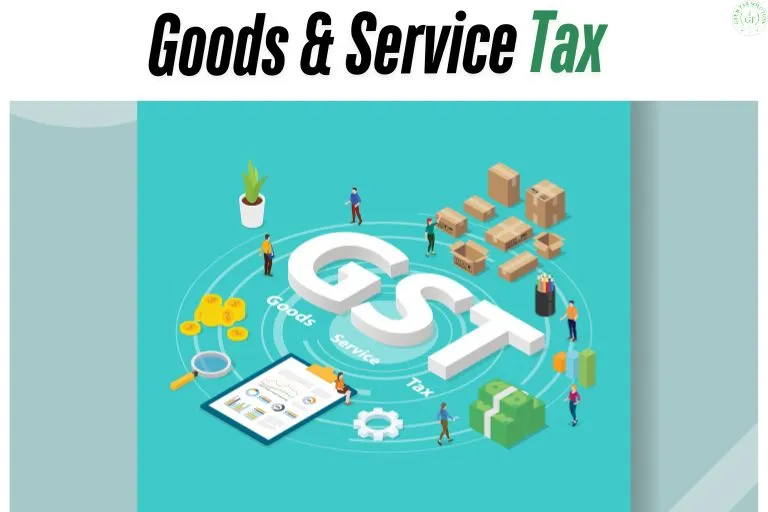
Goods and Services Tax (GST)
Goods and Services Tax (GST) is a comprehensive, multi-stage, destination-based tax levied on the supply of goods and services in India. Implemented on July 1, 2017, GST replaced multiple indirect taxes such as excise duty, service tax, VAT, and others, creating a unified taxation system. The primary objective of GST is to eliminate the cascading effect of taxes, ensure transparency, and enhance the ease of doing business.
GST is governed by the GST Council, which consists of representatives from the central and state governments. It is structured as a dual system, where both the central and state governments levy tax simultaneously. GST applies to all businesses engaged in manufacturing, trade, and services, except those exempted by law.
The tax is levied at various stages of the supply chain, with credit allowed for the tax paid on previous stages. This ensures that the end consumer bears the actual tax cost, while businesses can claim Input Tax Credit (ITC) to avoid double taxation. GST is categorized into Central GST (CGST), State GST (SGST), and Integrated GST (IGST), depending on whether the transaction is intrastate or interstate.
GST has brought several advantages to the Indian economy, businesses, and consumers. The primary benefit is the elimination of the cascading effect of taxes, where businesses previously paid tax on tax, increasing costs. With GST, businesses can claim ITC, reducing the overall tax burden.
Another key advantage is the simplification of the tax structure. Earlier, businesses had to comply with multiple tax laws, such as VAT, excise, and service tax, leading to confusion and compliance difficulties. GST consolidates all indirect taxes into one, making compliance easier and more transparent.
GST has also promoted economic growth by fostering a unified national market. Previously, businesses faced restrictions in inter-state trade due to different state tax laws. With GST, goods and services can move freely across states without multiple tax barriers, improving efficiency in supply chains and logistics.
Additionally, GST has increased tax compliance due to digitalization. The introduction of e-invoicing, online return filing, and real-time monitoring has minimized tax evasion. Consumers also benefit from a transparent tax system, where they can see the exact tax paid on goods and services. Overall, GST has streamlined taxation, boosted revenue collection, and improved business operations.
GST in India is classified into four types:
Central GST (CGST): Levied by the central government on intra-state transactions.
State GST (SGST): Levied by state governments on intra-state transactions.
Integrated GST (IGST): Applied on inter-state transactions, collected by the central government and distributed to states.
Union Territory GST (UTGST): Levied in union territories like Delhi, Chandigarh, and Andaman & Nicobar Islands.
For instance, if a business in Uttar Pradesh sells goods within the state, both CGST and SGST apply. If goods are sold to Maharashtra, IGST is applicable. These different types ensure that tax revenue is shared appropriately between the central and state governments, facilitating smooth governance.
The government has set specific turnover limits for GST registration. Businesses must register for GST if their annual turnover exceeds these limits:
For goods: ₹40 lakh in most states, ₹20 lakh for special category states.
For services: ₹20 lakh in most states, ₹10 lakh for special category states.
Additionally, businesses involved in interstate trade, e-commerce, or those required to pay tax under the reverse charge mechanism must register, regardless of turnover. Small businesses with turnover below ₹1.5 crore can opt for the Composition Scheme, which allows them to pay GST at a lower fixed rate without availing Input Tax Credit.
Registration: Businesses liable for GST must register online on the GST portal. The process requires submitting PAN, business documents, and bank details. Registration provides a unique GST Identification Number (GSTIN), which is mandatory for issuing invoices and filing returns.
Filing Types:
GSTR-1: Monthly/quarterly return for outward supplies.
GSTR-3B: Monthly summary return for tax payment.
GSTR-4: Annual return for composition taxpayers.
GSTR-9: Annual return for regular taxpayers.
Timely filing is crucial to avoid penalties and maintain compliance.
The introduction of GST in India was a landmark reform in the country’s taxation system. Before GST, businesses had to navigate a complex web of indirect taxes, including excise duty, VAT, service tax, and entry tax, all of which varied from state to state. This created inefficiencies, increased costs, and caused delays in the supply chain. GST simplified this by consolidating multiple taxes into a single, uniform tax structure applicable across the country. The GST system is designed to be multi-stage, meaning it applies at each point of value addition, from raw material procurement to the final sale to consumers. It is also a destination-based tax, meaning the tax revenue is collected by the state where the goods or services are consumed rather than where they are produced. This ensures a fair distribution of tax revenue among states and reduces tax-related disputes.
One of the major objectives of GST is to reduce tax evasion. Under the previous system, businesses often underreported sales to avoid paying taxes. With GST, the government has implemented stringent compliance mechanisms, including real-time invoice matching, e-way bills, and mandatory digital record-keeping. The introduction of the Goods and Services Tax Network (GSTN), an IT-based infrastructure that manages all GST transactions, ensures transparency and accountability. This digital transformation has not only minimized tax evasion but has also made tax filing and compliance more straightforward for businesses of all sizes. Small businesses, which previously struggled with multiple tax filings, now benefit from an easier, online-based compliance system that reduces their administrative burden.
Another significant impact of GST has been on logistics and supply chain management. Previously, businesses had to maintain warehouses in multiple states to avoid paying interstate taxes, leading to inefficiencies and higher costs. With GST eliminating these state-wise tax barriers, companies can now optimize their supply chains, consolidate warehouses, and improve efficiency. This has led to lower logistics costs and improved competitiveness for businesses. Furthermore, the reduction in paperwork and compliance requirements for inter-state movement of goods has accelerated trade and reduced transit times. The implementation of e-way bills has further streamlined the movement of goods, as transporters no longer have to deal with multiple state tax checkpoints.
GST has also significantly impacted consumers. Before GST, the final price of goods and services included multiple hidden taxes, making it difficult for consumers to understand how much tax they were actually paying. With GST, the tax is transparently included in the final invoice, ensuring clarity. Additionally, since businesses can claim Input Tax Credit (ITC) on GST paid at previous stages, the overall tax burden is lower, leading to more competitive pricing for goods and services. Over time, this has contributed to stabilizing inflation and making essential commodities more affordable.
Despite its numerous benefits, the implementation of GST has not been without challenges. Many businesses, especially small and medium enterprises (SMEs), faced difficulties in transitioning to the new system due to a lack of awareness and technical know-how. Additionally, the frequent changes in GST rules, tax rates, and return filing requirements initially caused confusion. However, over time, with increased familiarity and government efforts to simplify the process, compliance has improved. The government has also introduced initiatives such as the Composition Scheme, which allows small businesses to pay tax at a lower rate without maintaining extensive records, thereby reducing their compliance burden.
Looking ahead, GST is expected to continue evolving to address the concerns of businesses and taxpayers. The government is exploring ways to further simplify GST return filing, improve tax administration, and expand the tax base. Efforts are also being made to include currently excluded sectors such as petroleum products, electricity, and real estate under the GST framework to ensure a truly comprehensive indirect tax system. As GST continues to mature, it is poised to strengthen India’s economy, enhance ease of doing business, and contribute to the nation’s growth.
For assistance with GST filing, tax notices, ITR filing, company formation, and tax planning, feel free to contact Gst & Tax Solution, your trusted tax consultancy partner !
📞 Contact Us Today for a Consultation!